We've Come Full Circle
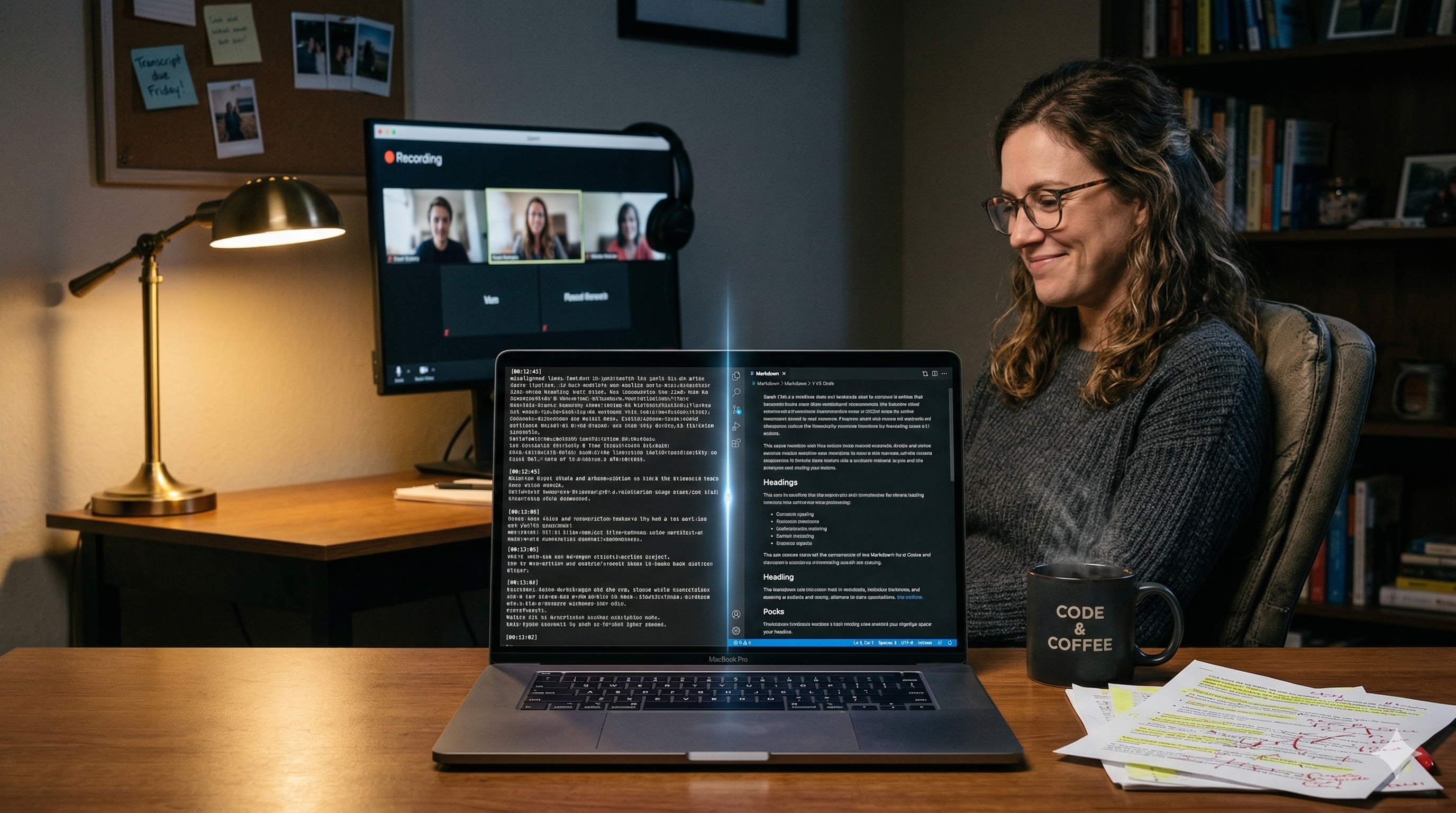
Growing up, I was the kid who'd do anything to avoid reading the chapter. Just show me the movie. Give me the documentary. Let someone explain it. Somewhere along the way, that completely flipped. These days, I consume a lot of video content — online training courses, conference recordings, YouTube videos — but not by watching it. I'd rather have the transcript. I can read faster than anyone can talk, I can search it, highlight it, feed sections to my AI assistant for discussion. The raw video is just the container. The text is what I actually want.
The problem is that raw transcripts are a mess. Have you ever looked at one? Every few seconds there's a timestamp. Lines break in the middle of sentences. Sentences break in the middle of thoughts. It's technically all there, but reading it feels like trying to drink from a firehose someone already dropped on the floor.
So I built a tool. I worked with Claude Code over a single session to write something that lives in my Mac's right-click menu. Highlight the transcript on the page, right-click, pick "Process this transcript," and it strips the timestamps, reassembles the fragments into real paragraphs, and saves a clean Markdown file. Took an afternoon. After that, I used it every day.
Then I hit a wall. A conference recording I wanted to process used a completely different format — a special marker character instead of timestamps, structured data underneath as JSON. My tool didn't know what to do with it. The old way was sitting right there as an option: copy the text, open an editor, strip the markers manually, fix every line break. I've done it. It's not hard, it's just forty-five minutes of your life you're not getting back.
Instead, I opened the session I'd been working in and asked Claude Code to remind me where we left off. It did. I described the new format the same way I'd tell a colleague: "Here's what the new one looks like — can we make the tool handle this too?" Twenty minutes later, it did.
That's the part I keep coming back to. The AI didn't do anything clever. It didn't invent a solution I couldn't have worked out myself. What it did was apply the same careful attention to that new format that it had applied to the original one — no impatience, no shortcuts, no drift. When you've been staring at the same kind of problem for a while, your brain starts cutting corners. It pattern-matches instead of actually reading. The AI doesn't have that problem. The tenth format gets the same treatment as the first.
Most people have a version of this in their own lives. A folder of files that needs renaming. A backlog of receipts. A document full of inconsistent formatting. Not hard problems — just big, tedious ones that keep getting pushed back because spending a Saturday afternoon on them never feels worth it. These are exactly the jobs AI is built for. Not because it's smarter than you, but because it doesn't get tired of them the way you do. And in my case, it turned a kid who would've done anything to avoid reading into someone who actually builds tools so he can read more.