Access Changes Everything
We needed a place to think out loud.
Not a polished blog. Not a social media feed optimized for likes. Just somewhere Chris and I could muddle through ideas in the open — scribble with a proverbial pen and paper, let thoughts breathe, maybe even get feedback from someone who stumbled across them. A place that felt like ours.
We looked at the usual suspects. Medium is fine, but it's their house, their rules, their algorithm deciding who sees what. Reddit is a conversation, not a canvas. Discord disappears into doomscrolling... None of them gave us what we actually needed — a personal corner of the internet that we owned, controlled, and could shape to fit the way we think. We were already using Obsidian — a free note-taking app that lets you build a personal knowledge base on your own computer, your own terms — and what we really wanted was a way to selectively open that thinking to the world. Without that personal touch and that seamless connection to how we already worked, we knew ourselves well enough to know the motivation simply wouldn't last.
So we built one. In a single afternoon.
Here's how it actually went. I sat down with an AI assistant and described what I wanted. It asked me questions. I asked it questions back. It made suggestions — I pushed back on some, accepted others. It felt less like typing commands into a machine and more like working with a developer who happened to know everything and never got impatient. We talked through hosting options and why one was better than another for our situation. We debated domain names. It flagged a configuration risk I hadn't thought of that could have broken my email. We picked a color, designed a logo, wrote the welcome page, and added a few thoughtful touches that made the whole thing feel intentional rather than thrown together.
By the end of the afternoon, we had a responsive, fast, custom website — live on its own domain, secure, with a knowledge graph, hover previews, search, and a sidebar full of notes. Five years ago, building something like this would have meant hiring a front-end developer, waiting weeks, and spending real money. Today it took one conversation and a free afternoon.
I'm not saying AI is magic. What I am saying is that it's a democratizer — and we've seen this before. The printing press didn't just make books cheaper. It broke the monopoly on knowledge held by the church and the aristocracy and handed it to ordinary people. It changed everything. Not because the technology was magic, but because of who suddenly had access to it.
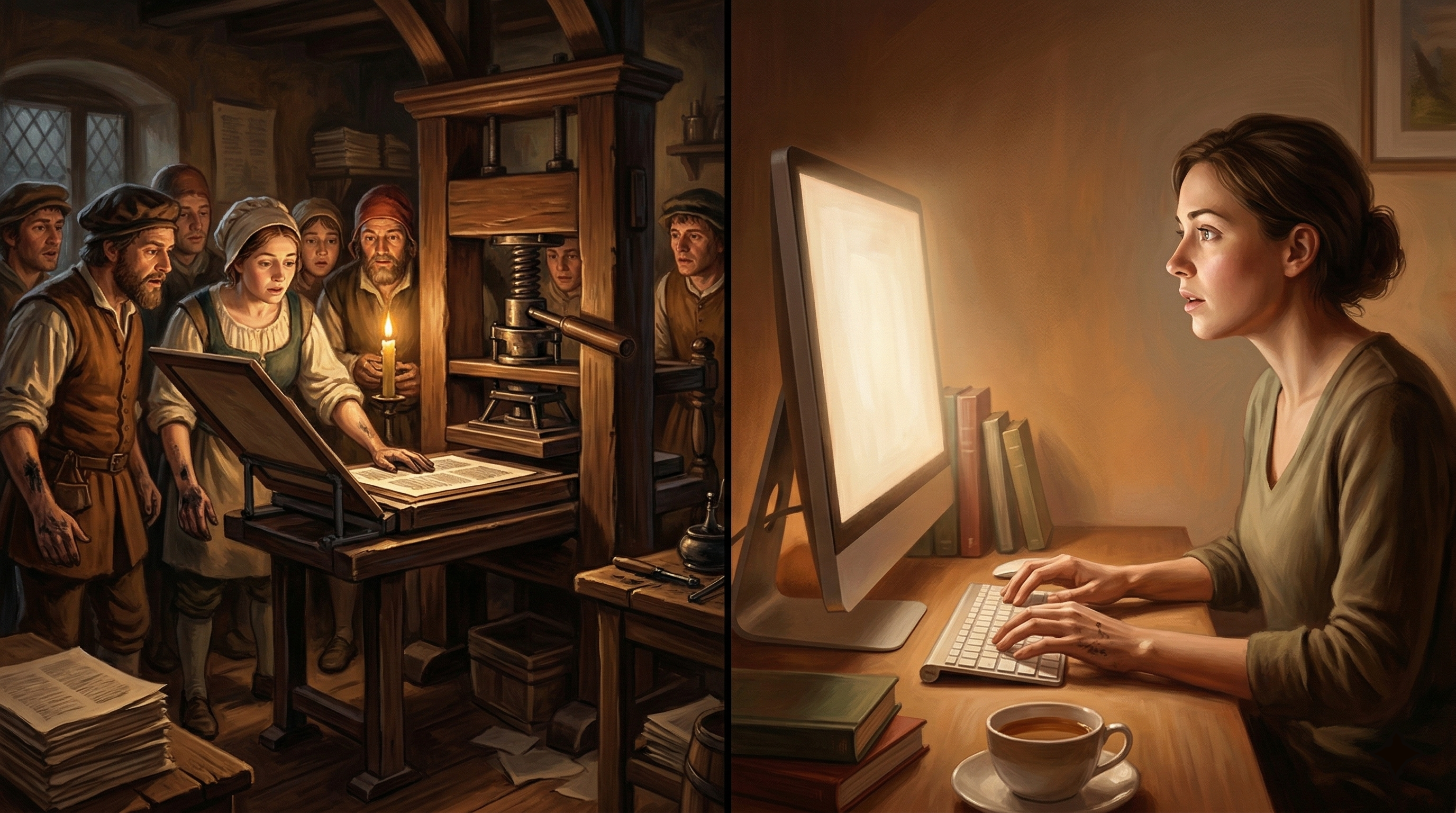
Think back to the early internet. Web 1 was the first wave — suddenly, anyone [with access] could obtain information that used to be locked behind library walls or expensive subscriptions. Web 2 pushed further — anyone could publish, connect, and participate. Then Web 3 arrived promising decentralization through blockchain and crypto — but the jury is still out as to whether it delivered on that promise for ordinary people.
AI could be the wave that actually does.
It puts capabilities in the hands of individuals that, until very recently, only well-funded companies with technical teams could access. The gap between "I have an idea" and "I built the thing" has never been smaller.
That's not hype. That's just what happened to us on a Friday afternoon in March.
The playing field is leveling out. The only question worth asking is whether you're going to step onto it.