Hand Off Tedious Tasks Without Writing Code
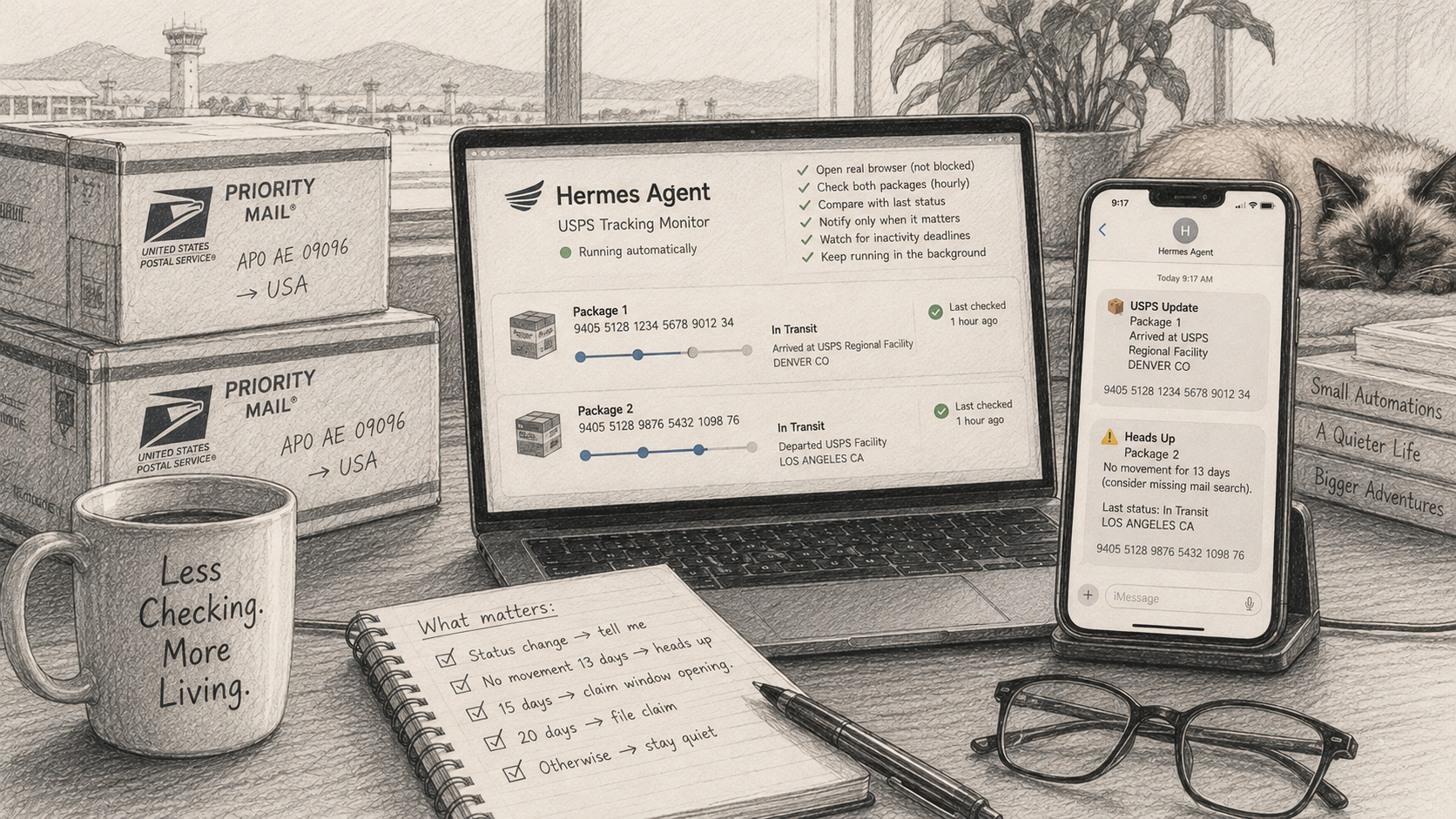
My wife and I shipped two USPS Priority Mail parcels from our APO address in Korea to the states. I wanted to monitor them. For about a week, my routine was the same every morning: pull up the USPS tracking page, squint at the status, and try to remember what it said yesterday. "USPS in possession of item." Was that new? Was it the same thing it said on Tuesday? I really don't remember. When a package goes quiet for two weeks, the page doesn’t tell you anything is wrong. It looks the same as the day before.
So I described the outcome I wanted to Hermes Agent, my AI assistant: I don't want to check this anymore. Tell me when something actually happens, or when it's time to start worrying.
The easy version of this job is "go read a web page." But the USPS tracking site blocks software from reading it; that is, it blocks 'web page scraping.' The same defenses that frustrate spam bots also frustrate real users who want to automate tedious tasks. Every approach we tried came back with "Access Denied." Not an error I could fix by asking more politely.
Hermes switched tactics. Instead of requesting the page, it opened it in a real browser, the way I would, and read what I would read. That got through. It kept working because the site remembered the browser between visits.
The rest is dull, and it’s the part I value. Hermes checks both parcels every hour and keeps notes on what it saw last time. When the status changes, I get one short message in Apple Messages that says, “Status changed from <old status> to <new status>.” Otherwise I hear nothing until 5 a.m.
One gap worried me. If Hermes stopped running, silence would look like good news. So every day at 5 a.m. it sends a short status message, even when nothing changed. If that message doesn’t come, I ask Hermes what went wrong. That is how I caught a different job of mine that had broken. We found the cause together and fixed it in a few minutes.
A stalled package also has a deadline: a window to file a missing-mail search, then a claim. After thirteen quiet days Hermes sends a gentle heads-up with the tracking links. At fifteen days it says the claim window is opening. At twenty it tells me to file the claim today. It does the math I kept failing to do: how long has it been?
I didn't suddenly learn to program or sign up for another product. I described a result in plain English: watch these two numbers, tell me when it matters, warn me if they go quiet. Hermes worked out the rest, including the hard parts. I just had to tell it what matters.
I now get a status message each morning and a change alert once in a while. Hermes now runs a handful of small jobs like this in the background. None of them is exciting. I no longer have to remember any of them.